When a Rumson home changes ownership, the borough's fire prevention office inspects its smoke and carbon monoxide alarms and issues a certificate tied to the transfer date. For years the item sellers most often scrambled to fix before closing was a fire extinguisher mounted near the kitchen. That requirement is gone from state law. Its replacement is at the electric meter, and it applies to any house with a standby generator, solar panels or a battery system.
The new requirement is a small printed label that state guidance says is available at minimal cost. In Rumson the inspection is scheduled locally, in an evening window, and an adult has to be home for it. If the house isn't in compliance, the borough's form charges $45 for a reinspection, which means a second evening visit close to closing.
What changed, and when
Governor Murphy signed Assembly Bill A3894 as P.L.2025, Chapter 19, approved February 3, 2025. The Legislature's bill record shows the companion Senate bill and the chapter number. The law took effect immediately.
It made two changes that matter to a seller. It struck the paragraph requiring every one- or two-household home to have at least one portable fire extinguisher. It also added a new sentence: any home covered by the smoke alarm statute "that contains a secondary power source shall have a label installed within 18 inches of the main electrical panel and electrical meter warning of the danger associated with secondary power sources."
The state's own name for the certificate changed to match. The New Jersey Department of Community Affairs' online application now calls it the Certificate of Smoke Alarm, Carbon Monoxide Alarm, and Secondary Power Source Identification Label Compliance.
| Before February 3, 2025 | Since February 3, 2025 | |
|---|---|---|
| Smoke alarms | Required | Required |
| Carbon monoxide alarms | Required | Required |
| Portable fire extinguisher | Required by state statute | Removed from the statute; Rumson's code sheet lists it as optional |
| Secondary power label at panel and meter | Not part of the resale certificate | Required wherever a generator, solar, battery or other supplemental source exists |
Why older installations are the ones that get caught
A DCA Division of Fire Safety memo dated February 13, 2025 says the labeling rules "already apply to new installations of secondary power sources." The law brought existing installations up to the same standard "to provide the same level of protection to our firefighters."
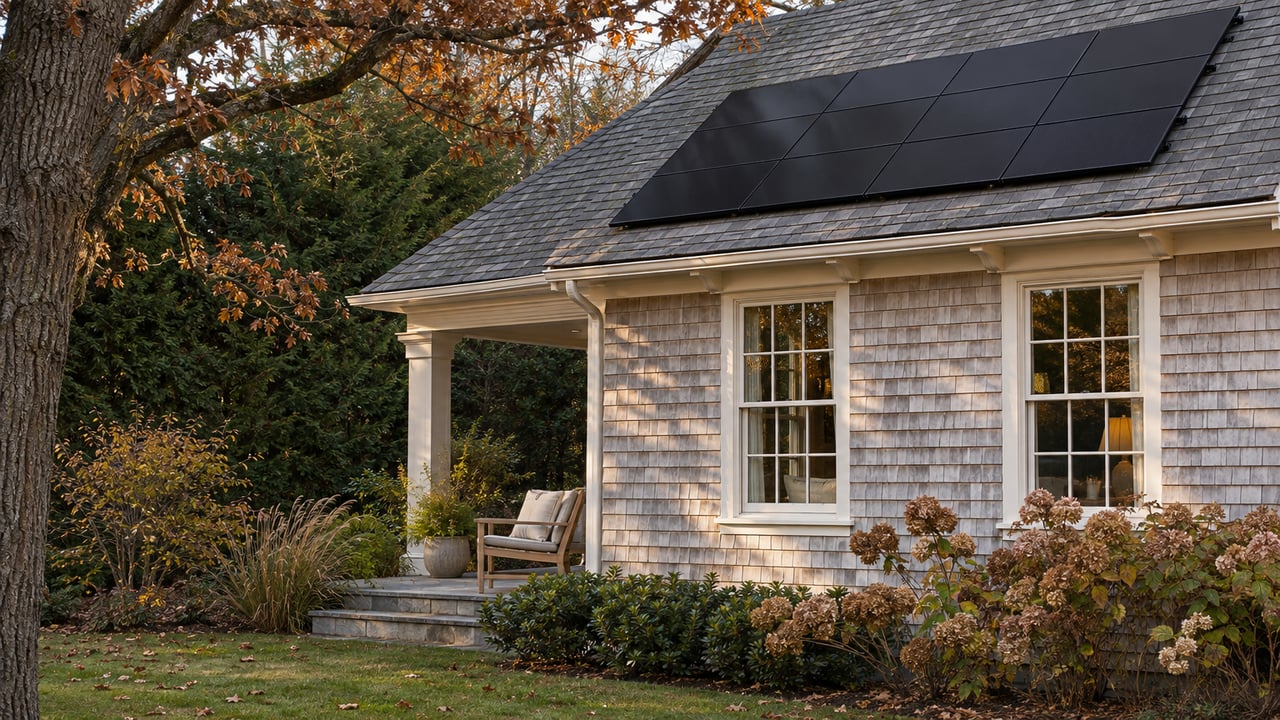
That means the resale inspection now covers backup power that was installed years ago: a generator from several winters back, an older solar array, or a battery system added during a renovation. The certificate requires the label at the panel and meter for each of them.
The memo defines the sources broadly: "permanently installed internal combustion generators, solar panels, battery storage systems, or any other supplemental source of electrical energy to the primary power supply." It also sets out what the label has to say:
- Wording similar to "CAUTION: MULTIPLE SOURCES OF POWER"
- Not handwritten
- A label that complies with ANSI Z535.4 meets the requirement
- Mounted within 18 inches of the main electrical panel and the electrical meter
DCA notes that compliant labels "are generally available at minimal cost." It describes the memo as guidance for fire officials, realtors and the public "until regulations can be promulgated." The rules cover one- and two-family homes and attached single-family homes, and they're enforced when a home changes occupancy.
One office handles both Rumson and Fair Haven
Rumson's inspection is local. The Boroughs of Rumson and Fair Haven share one Division of Fire Safety & Fire Prevention, based at Rumson Borough Hall, 80 East River Road. The office number is 732-842-3022. The borough's Fire Prevention page lists Martin Hawley as Fire Prevention Officer and links the application.
The current Rumson application already includes the new law. Next to the long-standing question about monitored alarm systems, it adds a yes-or-no question about secondary power sources. Several details on the form affect scheduling more than the alarms themselves do:
- The fee is $45. The check is payable to the borough where the property is located. You bring the completed form and payment to Rumson Borough Hall.
- A failed inspection costs another $45 for the reinspection.
- Inspections happen in a 4:30 to 6:30 p.m. window.
- Someone over 18 must be present. If no one is there, the inspection is rescheduled.
- A central-station monitored fire alarm has to be certified first. A licensed NJ Fire Prevention Contractor must certify it as operational before the inspection, or the inspector can cancel on site and require a reinspection.
- The certificate is valid for six months from the day of the inspection.
The monitored-alarm step and the generator label both need a contractor or a purchase before the inspection. Neither can be fixed in the 30 minutes before the inspector arrives.
Working backward from a closing date
Timing is where these details add up. The DCA's online application sets its fee by how far ahead you apply: $45 if the closing is more than ten business days away, $90 at four to ten business days, and $161 if closing is less than four business days away. Rumson's form lists a flat $45. Ask the Fire Prevention office which applies before you count on the lower fee. Applying early avoids the question altogether.
A workable order of operations for a Rumson seller:
- When the house is under contract, check for secondary power. Any generator, solar array or battery means the panel and meter need a printed label.
- Order the label and, if you have one, schedule the monitored-alarm contractor. Both have to be done before inspection day.
- Walk the house against the alarm checklist below. Replace anything that won't pass.
- File the application at Borough Hall with plenty of business days left before closing, and give the office an evening contact who can be home between 4:30 and 6:30 p.m.
- Leave room for a reinspection if something fails.
- Keep the six-month validity in mind if your closing date might move.
What the inspector checks inside the house
Rumson's posted Uniform Fire Code update sheet lists the standard used for both boroughs:
- Smoke alarms on each level, outside each sleeping area near the bedrooms, and in each sleeping room.
- Ten-year sealed battery single-station smoke alarms. Existing AC-powered alarms are accepted, but they may not be replaced with battery-powered units.
- Carbon monoxide alarms near the sleeping areas. Homes with no fuel-burning device and no attached garage are exempt. CO alarms can be battery, hardwired or plug-in, and must be listed to UL 2034.
- The secondary power label at the panel and meter, as described above.
The extinguisher is still on the sheet, under a heading marked "optional." If one is installed, the sheet's specifications apply. It must be within 10 feet of the kitchen and on the path out of the house, hung on the manufacturer's bracket, rated 2A-10B:C and no more than 10 pounds, with its top no higher than five feet off the floor. It also needs a service tag from the past 12 months or a recent purchase receipt, and the operating instructions have to be left for the next occupant.
Short answers
Do I still need a fire extinguisher to sell in Rumson? P.L.2025, c.19 removed the extinguisher from the state statute, and Rumson's code sheet lists it as optional. If you leave one in the house, it needs to meet the mounting and service specifications above.
Is this the same as a certificate of occupancy? No. Rumson's certificate of occupancy checklist on its forms page is for new construction and goes through the Building & Construction office. The smoke, CO and label certificate is issued by Fire Prevention.
This post is general information, not legal advice. Fees, forms and rules can change, so please confirm your own situation with the Fire Prevention office and your attorney before you set a closing date.
If you're preparing a Rumson home for sale and want help sorting out the panel, the paperwork and the inspection calendar early, Katie Gay NJ can help you plan it from the day you go under contract. Let's Connect.